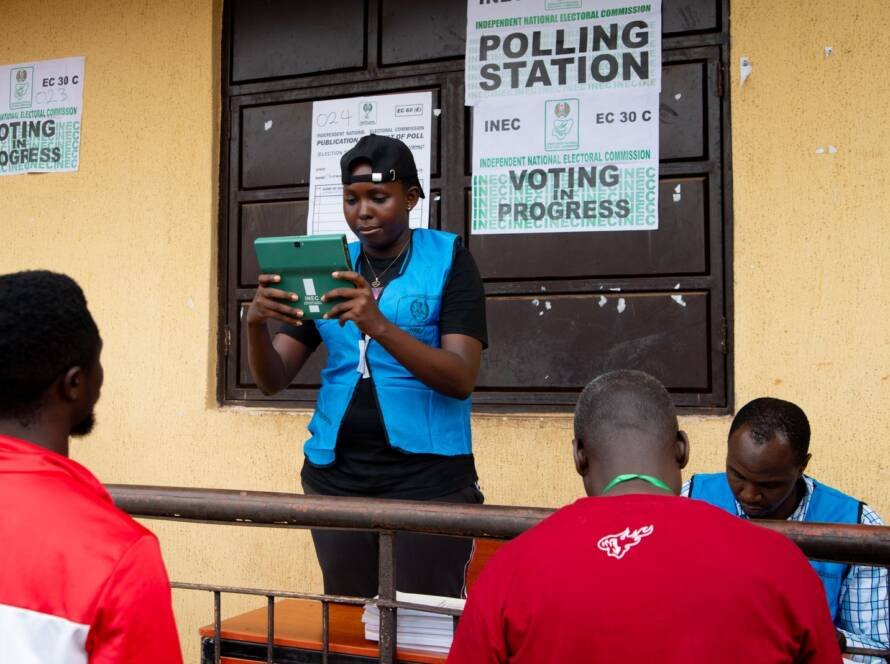
Over the past few months, this series has made a consistent case: Kenya’s 2027 election carries a predictable set of risks, including opportunistic crime during periods of civic tension, protest mobilization, and disinformation that outruns official correction. Organizations that prepare early manage those risks far better than organizations that react to them.
That case applies just as directly, and often more urgently, to the individuals who sit at the center of those organizations, and to those who stand for office in the first place.
A case in point: Homa Bay, August 2026
This isn’t a distant or hypothetical scenario. In mid-August 2026, a political rally in Homa Bay County was disrupted by organized groups, resulting in confirmed deaths, dozens of injuries, and significant property destruction: vehicles torched, businesses and a church compound damaged, and roads barricaded to block a convoy’s movement.
What makes the incident relevant here isn’t the politics of who organized what. This series stays out of that, deliberately, and readers should treat contested claims about responsibility as exactly that: contested and under investigation. What’s relevant is the pattern, which investigators have since confirmed: this was not a spontaneous outbreak. Weapons were reportedly distributed to youths in the area a day or more before the rally, and a large number of people were mobilized in advance to block roads and confront the convoy. That mobilization, including payments, gathering points, weapon distribution, and coordination between groups from multiple areas, is exactly the kind of activity that tends to leave a signal trail before it becomes a physical event, not after.
This is the risk this series has described from the start, now with a concrete, current example: political intolerance escalating into organized violence, with real costs, to life, to property, to public trust, that fell on rally attendees, police officers, journalists, and ordinary residents caught in the disruption, not only on the political figures involved.
The risk doesn’t stay institutional
A threat assessment built around a company’s offices, branches, or operations tells only part of the story. Executives travel between those sites personally. Their names and faces are attached to institutional decisions. Their families live at addresses that are, in most cases, discoverable. And political candidates carry all of that exposure at a national scale: a public schedule, a public image, and a family whose safety is inseparable from the candidate’s own.
The same pattern this series has tracked at the institutional level shows up again here: an online narrative escalating into a physical incident is not a separate risk category from a fabricated video of a public figure or a coordinated attack on a candidate’s reputation. It’s the same risk, aimed at a person instead of a building. Homa Bay is a reminder that it’s also the same risk aimed at anyone standing near that person: staff, security details, journalists, and bystanders.
Where the exposure actually concentrates
For business leaders, executive exposure tends to cluster around a few predictable points: personal and family security at private residences, reputational attacks that use manipulated media to distort what a leader has said or done, and the operational disruption that follows when a leader becomes the story rather than the organization.
For political candidates and senior campaign figures, the exposure is broader by necessity: national travel on short notice, high-density public appearances where crowd and route risk shift within hours, campaign offices and residences that need to stay both open and secure, and a name and image that becomes a direct, ongoing target for coordinated disinformation and deepfakes for the length of the campaign.

Why this needs one picture, not several disconnected ones
The organizations, executives, and public figures who manage this well share one trait: they don’t treat digital monitoring, physical security, and crisis response as three separate vendors filing three separate reports. They run them as one picture, so a mobilization signal, weapons moving, groups gathering, routes being planned, reaches the people responsible for physical safety before a convoy reaches that road, not after.
That’s the same Election Intelligence Cell methodology this series has already walked through: AI-supported disinformation and sentiment monitoring, open-source intelligence gathering, and analyst validation that turns raw alerts into a decision-grade brief, applied at whatever scale the exposure requires. For an institution, that might mean location-specific hotspot mapping across multiple sites. For an executive or a candidate, it means the same monitoring refocused on a name, an image, a travel route, and the people closest to them.
Preparation scales with exposure, not with panic
None of this is about predicting outcomes or forecasting unrest. This series has been consistent on that guardrail from the start, and it holds here too. It’s about the same principle applied one level closer to the people actually carrying the risk: preparation that starts twelve months out is a plan; preparation that starts twelve days out is triage. Homa Bay is a reminder of what the cost of the second option can look like.
If your organization has already started asking what its election risk looks like a year from the vote, the next question is worth asking alongside it: what does that same risk picture look like for the leaders, candidates, and families standing closest to it?