

Kenya has one of the highest rates of social media driven news consumption in East Africa. That is a strength for civic engagement, and a vulnerability during an election. When a large share of the public gets breaking information from timelines rather than newsrooms, fabricated content has a shorter distance to travel before it influences real world behavior.
Deepfakes, AI generated audio, video, or images designed to look authentic, are no longer a novelty concern. The tools to produce convincing fake video or cloned voice audio are now cheap and widely available, and election periods are exactly the environment where they do the most damage: a fabricated clip of a candidate making an inflammatory statement, a synthetic leaked security forces audio clip, or a doctored image suggesting violence has already broken out in a specific area. Each of these can spread for hours before anyone in a position to correct it even sees it.
n
n
nn
Why Deepfakes Are a Bigger Threat Now Than in Previous Election Cycles
The core technology behind synthetic media has moved from research labs to consumer applications in a very short period of time. Producing a convincing voice clone once required specialist skills, significant audio samples, and meaningful processing power. Today, a handful of seconds of publicly available audio, taken from a speech, an interview, or a social media video, can be enough to generate a passable synthetic voice using freely available tools. Video face swap technology has followed a similar trajectory, moving from something that required visual effects expertise to something available through consumer apps and low cost online services.
This matters for Kenya’s 2027 election for two reasons. First, the barrier to creating convincing fabricated content has effectively disappeared, which means the volume of synthetic content in circulation during a high attention event like a national election is likely to be far higher than in 2022. Second, and less obviously, the mere existence of deepfakes creates what researchers sometimes call the liar’s dividend: once audiences know convincing fakes exist, genuine footage can also be dismissed as fabricated by anyone who finds it inconvenient. That cuts both ways, and it makes the verification habits discussed later in this piece more important, not less.
What Deepfakes and Synthetic Media Actually Look Like
Video and Face Swap Deepfakes
These take an existing video and replace the face, and increasingly the voice and lip movements as well, of one person with another. In an election context, this typically means fabricated footage of a candidate, official, or public figure saying something they never said, timed for release when it will have maximum impact and minimum time for a response.
Voice Cloning and Synthetic Audio
Audio only fakes are, in some ways, more dangerous than video because they are harder to visually scrutinize and easier to distribute quickly through voice notes and messaging apps. A cloned voice clip of a security official, a candidate, or an electoral commission representative can spread through WhatsApp groups long before any newsroom has a chance to verify it.
Doctored and Recontextualized Images
Not every piece of election disinformation requires sophisticated AI tools. A significant share of the problem comes from genuine images or video, taken from unrelated events, sometimes from entirely different countries or years, and recirculated with a caption claiming they show violence or unrest at a specific Kenyan location during the election period.
AI Generated Text and Coordinated Amplification
Beyond audio and video, AI tools can now generate large volumes of convincing text content quickly, which is often paired with coordinated, sometimes automated, social media accounts designed to make a narrative appear more widespread and organic than it actually is. This coordinated amplification is often what turns a single piece of fabricated content into something that looks, at a glance, like a genuine groundswell of public sentiment.
Global Precedent: This Has Already Happened Elsewhere
Kenya would not be the first country to face this problem during an election, and looking at how it has played out elsewhere is instructive. In January 2024, an AI generated robocall impersonating a sitting United States president circulated ahead of the New Hampshire primary, urging recipients not to vote, an incident widely reported at the time and one of the clearer public examples of synthetic audio being used for direct voter suppression. In Slovakia’s 2023 parliamentary election, an AI generated audio clip purporting to capture a candidate discussing vote rigging spread rapidly in the final days before polling, during a period when election rules limited the ability of media and campaigns to respond, which meant the clip had an outsized window to circulate before it could be meaningfully challenged.
These cases share a common thread that is directly relevant to Kenya’s 2027 election. In both instances, the content was released or spread during a compressed decision window, close enough to polling that verification and correction struggled to catch up before the content had already shaped public conversation. Election observers and international bodies have flagged AI generated disinformation as a rising concern across the many national elections held globally in recent years, and there is no reason to expect Kenya’s information environment, with its heavy reliance on social and messaging platforms for real time news, to be less exposed than the examples above.
What This Risk Looks Like in Practice
- Fabricated statements attributed to candidates, officials, or the electoral commission, timed for periods when official channels are slow to respond.
- Recycled or doctored images and video from unrelated events, recontextualized as breaking footage from a specific location.
- Synthetic audio designed to sound like a leaked private conversation or official communication.
- Coordinated networks of accounts amplifying a single fabricated claim to make it appear more widely believed than it actually is.
For a business or institution, the practical danger is not just that a piece of content is fake. It is the operational decisions that get made in response to it before anyone has had a chance to verify it, closing a site, pulling staff off the road, or issuing a public statement based on a claim that turns out to have no basis in fact.
n
n
nn
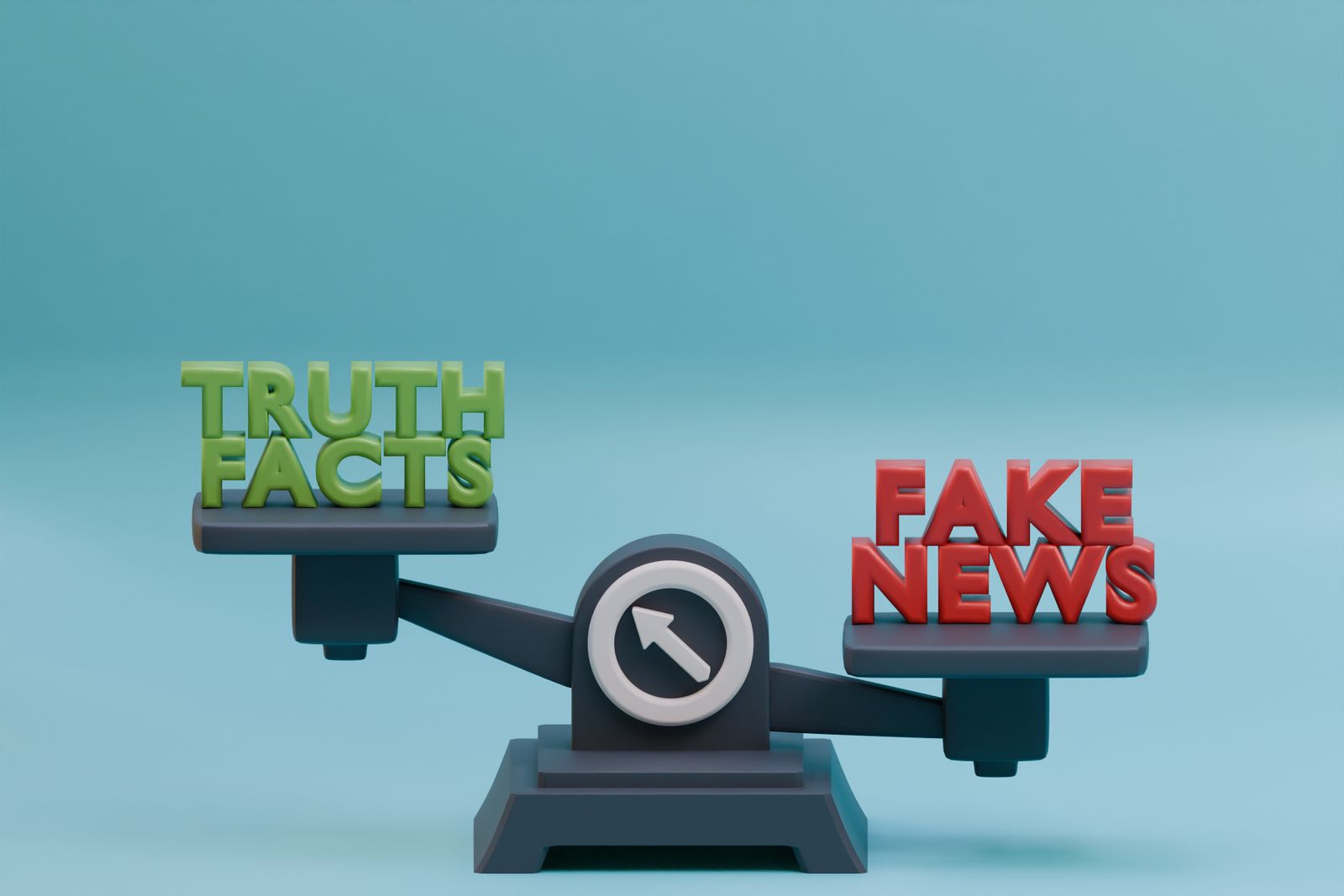
How to Verify Before You React or Share
- Check whether the claim appears on the official IEBC channels or established newsroom accounts before treating it as fact.
- Look for the original source. A reverse image or video search often surfaces the real, unrelated origin of recycled footage.
- Check for consistency in small details. Lighting, shadows, background audio, and lip synchronization are still frequent, though shrinking, tells in lower quality synthetic video.
- Cross reference across multiple independent sources rather than relying on a single account, particularly if that account has no prior track record.
- Treat urgency and emotional intensity as a signal to slow down, not speed up. Manipulated content is deliberately designed to provoke an immediate reaction.
- For business and institutional decision makers, avoid making operational calls such as closures, staff movement, or public statements based on a single unverified clip, however convincing it looks.
Building an Organizational Verification Protocol
Individual vigilance helps, but it is not a substitute for a defined organizational process. Organizations that handle election period misinformation well tend to share a few common practices, put in place well before the campaign season begins.
- Designate a verification lead. One person or a small team should own the responsibility of confirming or denying viral claims before any operational decision is made in response to them.
- Predefine escalation steps. Decide in advance what level of confirmation is required before a claim triggers a site closure, staff movement, or public statement, rather than deciding under pressure in the moment.
- Train frontline and communications staff on red flags. The people most likely to encounter viral content first, security guards, receptionists, social media managers, should know the basic verification steps outlined above.
- Maintain a relationship with a monitoring partner. Having a specialist team already tracking the information environment means a claim can often be confirmed or dismissed within minutes rather than hours.
- Prepare a holding statement template. If your organization is directly targeted by disinformation, having a pre approved communication framework ready significantly shortens response time.
Where ConvergedSkills Fits In
Our AI supported disinformation monitoring, built on sentiment and narrative tracking tools layered with analyst validation, is designed to catch coordinated or synthetic content early and confirm what is real before it reaches your leadership team. That combination matters. AI tools alone generate noise and false positives, flagging far more content than any team could reasonably review, much of it harmless. Analysts alone cannot monitor at the speed or scale a national election requires, particularly during peak periods when content volume spikes sharply. Board grade intelligence needs both, and needs them working together rather than as two separate, disconnected processes.
In practice, this means our team is tracking narrative volume and sentiment continuously, with automated tools surfacing anomalies and emerging patterns, while trained analysts assess what is actually credible, what is likely to spread further, and what specifically warrants a brief to your leadership team. This is the same integrated approach behind the broader Threat, Vulnerability and Risk Assessment work we do outside the election context, applied here to the specific problem of synthetic and coordinated disinformation.
Frequently Asked Questions
How can I tell if a video is a deepfake just by looking at it?
It is getting harder, and relying on visual inspection alone is increasingly risky. Older tells such as unnatural blinking, inconsistent lighting, or blurred edges around the face are becoming less reliable as the technology improves. Source verification and cross referencing matter more than visual scrutiny at this point.
Should we ignore viral content entirely until it is verified?
Not ignore, but not act on it either. The right approach is to treat unverified viral content as a prompt to check, not as a fact to respond to. Monitoring it while verification happens is appropriate. Making operational decisions based on it before verification is where organizations get into trouble.
What should we do if our own organization is targeted by a deepfake?
Move quickly to confirm internally what is false, activate your predefined holding statement, and communicate clearly and early with staff and stakeholders. Silence tends to let a fabricated narrative fill the gap, so a fast, factual response matters more than a perfect one.
Is this only a risk in the final weeks before the election?
No. Disinformation volume typically rises through the nomination and campaign periods and peaks around results day, but establishing what normal information activity looks like for your organization needs to start well before that peak, which is why monitoring should begin months, not days, ahead of the vote.
We will be publishing more in this series as Kenya moves through 2027’s candidate nomination and campaign periods, when disinformation volume typically rises sharply. If your organization needs a verification protocol in place before that period starts, that is a conversation worth having now.
Read the first post in this series, Kenya’s Next Election Is 12 Months Away, or explore our threat and risk assessment services.
Kenya’s Regulatory and Legal Context
Kenya already has legal tools that touch on election related disinformation, even if none were written with deepfakes specifically in mind. The Computer Misuse and Cybercrimes Act includes provisions addressing the publication of false information likely to cause panic or unrest, and the Independent Electoral and Boundaries Commission has, in previous cycles, issued codes of conduct for candidates and parties that touch on the spread of misleading campaign material. The Communications Authority of Kenya also plays a role in monitoring broadcast and telecommunications content during election periods.
None of this changes the practical reality for a business or institution trying to make a decision in the moment. Legal remedies, where they exist, operate on a timeline of days or weeks. A fabricated clip can shape public perception within hours. Organizations should treat the legal and regulatory environment as a backstop for accountability after the fact, not as a substitute for having their own verification and response capability in real time.
How Disinformation Typically Escalates During a Campaign
Understanding the general shape of how disinformation volume tends to build over an election cycle helps organizations calibrate their own monitoring intensity rather than treating every week of the campaign as equally high risk.
- Pre nomination baseline. Activity is relatively low, but this period is valuable precisely because it establishes what normal looks like, making later anomalies easier to spot.
- Nomination period. Volume rises as candidates and parties are confirmed, and early narratives, some genuine, some fabricated, begin to take shape around specific individuals and issues.
- Sustained campaign season. Content volume remains consistently elevated, with periodic spikes around debates, rallies, and major campaign events.
- Final week before polling. This is typically the highest risk window for high impact synthetic content, since there is limited time for verification and correction before votes are cast, as seen in the Slovakia example referenced earlier.
- Results day and immediate aftermath. Volume peaks sharply, with a mix of genuine confusion, rumor, and deliberately fabricated content about results, violence, or irregularities.
- Post results legal and political period. If results are contested, this period can extend the high risk window by weeks, historically one of the more volatile phases of a Kenyan election cycle.
Mapping monitoring intensity to this pattern, rather than applying a flat level of attention throughout, is one of the more practical ways organizations can use limited resources efficiently while still being fully prepared for the periods that matter most.
Media Literacy Is a Security Investment, Not Just a Communications One
Organizations often treat misinformation awareness as a communications team concern, separate from physical and operational security planning. During an election period, that separation breaks down quickly. A fabricated clip that convinces staff a specific route or area is unsafe can trigger the same operational disruption as a genuine security incident, whether or not the underlying claim is true. Building basic verification literacy across a wider group of staff, not just the communications team, reduces the chance that fabricated content drives a costly overreaction.
This does not need to be complicated. A short briefing before the campaign season begins, covering the verification steps outlined above and who to contact internally when something looks suspicious, is often enough to meaningfully reduce an organization’s exposure to this category of risk.
The common thread across every case above is timing. Synthetic content is rarely designed to survive long term scrutiny. It is designed to shape a decision, a headline, or a mood in a narrow window before anyone can catch up with the facts. Recognizing that window, and building the organizational habits to slow down inside it rather than react immediately, is the single most transferable lesson from every documented case of election related synthetic media to date.
Will detection technology keep up with generation technology?
Detection tools are improving, but so is generation technology, and the two tend to advance in tandem. Treating detection tools as one input among several, rather than a single source of truth, is a more resilient approach than expecting any one piece of software to solve the problem on its own.

